
Call Us Today!
Call Us Today!

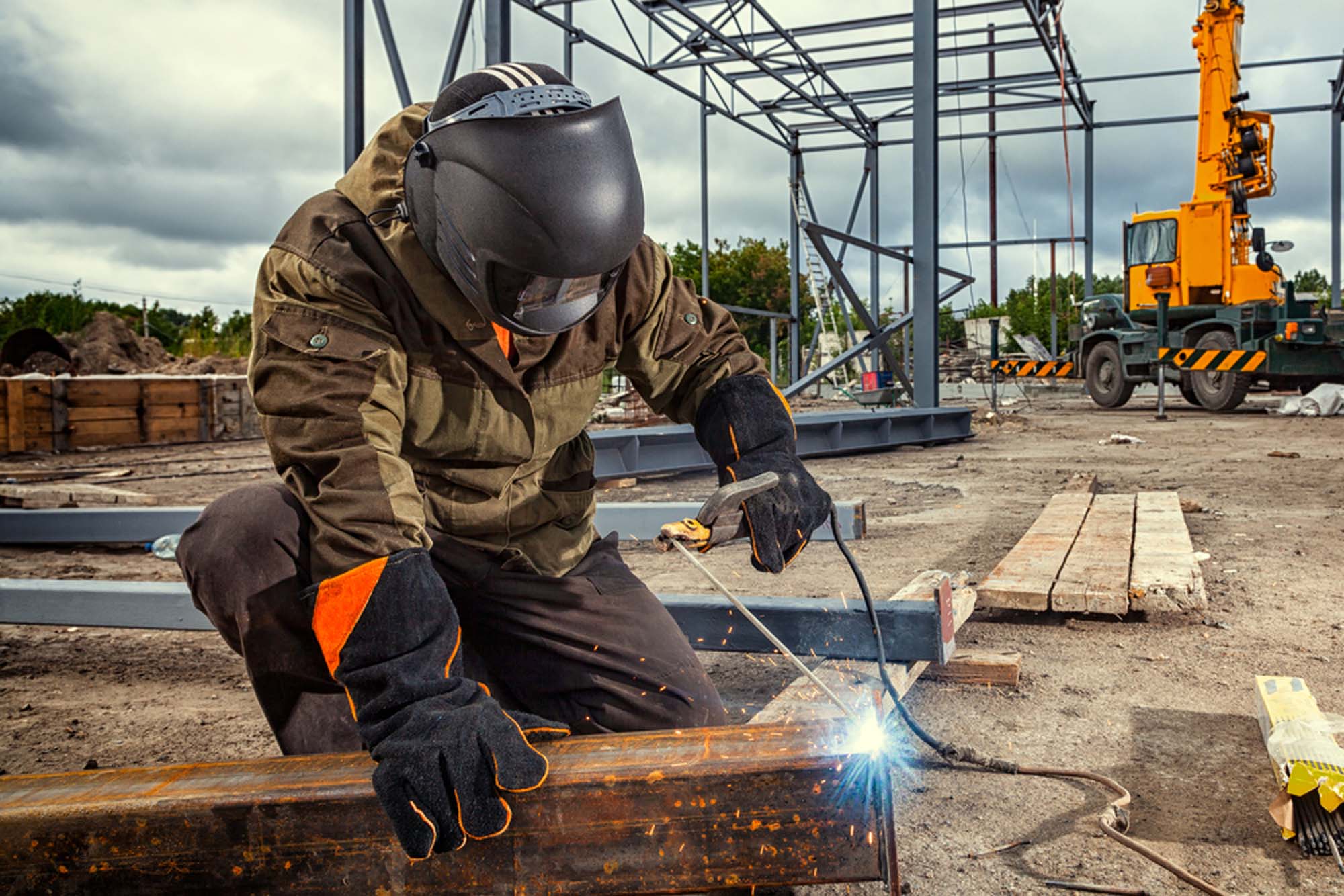
The strength and rust resistance of custom ironwork depends more on weld quality than on material thickness alone. MIG welding suits fast, high-volume production joints, TIG welding produces cleaner welds for visible ornamental sections, and stick welding penetrates thick structural iron most reliably. A joint with porosity, undercut, or incomplete fusion gives moisture a direct path into the metal, which is why matching the right welding process to each joint determines how long a gate, railing, or door actually lasts.
Two iron gates can look identical on delivery day and age at completely different speeds once New Orleans humidity gets to them. The difference usually traces back to a single, unglamorous factor: how the welder joined the metal in the first place.
At TurnKey Ironworks, we choose a welding process for each joint instead of running one method through every job that comes into the shop. This guide explains how MIG, TIG, and stick welding differ, and why that choice shapes how well a gate, railing, or door holds up over time.
A quick look at an existing piece, or a walkthrough of a new design, tells us which welding approach fits the joints involved. Contact us today to get a free estimate built around the weld quality your project actually needs.
According to welding-inspection literature, incomplete fusion and undercut, not material failure, are consistently identified as leading causes of joint failure, and both defects create the exact moisture pathway that starts rust from the inside out.
A weld joint is the point in any piece of ironwork most likely to fail first, whether from stress, moisture, or years of expansion and contraction in New Orleans heat. The process used to create that joint, not just the grade of iron or steel, determines how well it holds up over time. Heat input and penetration depth trace back to which welding method a fabricator chooses for that joint.
MIG welding (metal inert gas) feeds a continuous wire through shielding gas, producing fast, consistent welds with moderate heat input, the standard choice for high-volume production joints on fences and gates. TIG welding (tungsten inert gas) trades speed for control, running the lowest heat input of the three and giving a welder precise command over the puddle, which is why it shows up on visible, ornamental joints.
Stick welding (shielded metal arc) tolerates rust, mill scale, and surface contamination better than MIG or TIG, while delivering the deepest penetration on thick structural sections. No single process is universally correct, and a fabricator who runs one method through every job is optimizing for shop speed, not joint integrity.
The first decision in any weld is which process actually fits the metal thickness and the job that joint has to do.
Every custom piece we build starts with this process match, built into our custom iron fabrication work from the first design conversation.
Penetration is how deep a weld fuses into the base metal, and shallow penetration can look finished while carrying a fraction of its rated strength. The table below compares the three processes on penetration, best use, and appearance.
| Welding Process | Typical Penetration | Best Use on Ironwork | Appearance |
|---|---|---|---|
| MIG | Moderate, reliable on standard-gauge stock | High-volume production joints, standard fences and frames | Clean, consistent bead with moderate spatter |
| TIG | Shallow to moderate, precisely controlled | Ornamental scrollwork, visible joints, thin decorative sections | Smoothest, most uniform bead of the three |
| Stick | Deepest of the three processes | Thick structural frames, field repairs, contaminated base metal | Rougher bead, needs more grinding to finish clean |
Skipping that check means trusting the process default instead of confirming the joint holds the load it needs to carry.
Rust rarely starts on a flat, well-coated surface. It starts at a defect the weld itself created.
Any one of these defects can hide under a coat of paint for months before rust bleeds through and reveals the problem underneath.
A structurally sound weld can still fail early if nobody cleans it up after the arc goes out. Finishing work is where a lot of shortcuts hide.
Grinding removes hardened slag, spatter, and flux residue that would otherwise trap moisture against the joint. It also blends the transition between the weld bead and the surrounding metal, removing a stress-concentration point that can crack under repeated expansion and contraction.
A rushed grind that leaves a sharp ridge or a shallow groove creates a new place for water to sit, undoing the benefit of a properly penetrated weld. Feathering the edges so the weld reads as one continuous surface with the base metal is standard practice on every visible joint we finish.
New Orleans humidity and salt air are unforgiving on any bare metal joint left exposed even briefly. A freshly ground weld has zero protective coating, and heat from the arc can leave the surrounding metal more reactive than the rest of the piece.
Priming immediately after finishing closes that exposure window before humidity gets a foothold. A zinc-rich primer bonds directly to bare steel and gives the topcoat something stable to grip, which matters most right at the weld where the metal’s surface has just been disturbed by heat and grinding. For welds discovered after installation, whether from storm damage or age, our mobile welding crew can grind, reweld, and recoat the joint on-site instead of removing the whole piece.
A homeowner does not need welding training to catch the warning signs on a finished piece.
If an existing gate or railing already shows any of these signs, our iron work repairs team can assess whether the joint needs a full reweld or a targeted patch.
The welding process behind a gate or railing is invisible once the piece is installed, but it is the single biggest factor in whether that joint lasts twenty years or five. Choosing MIG, TIG, or stick for the right reason, not out of habit, is what separates ironwork built to last from ironwork that just looks finished on delivery day.
At TurnKey Ironworks, we match the welding process to the joint on every custom fabrication and repair we take on across the New Orleans area. Call us today to talk through your project and get a quote built around the weld quality your ironwork actually needs.
TIG welding generally works best on wrought iron because its low heat input limits warping on thin, detailed sections while still producing a clean, controllable weld. Stick or MIG suits thicker structural iron better, where deeper penetration matters more than surface finish.
MIG feeds a continuous wire through shielding gas for fast, moderate-heat welds suited to production runs, while TIG uses a tungsten electrode for slower, lower-heat welds with tighter control. TIG usually gives a cleaner finish on visible joints, and MIG keeps larger jobs moving.
Yes, stick welding works well on iron gates and railings, especially thick structural frames and repairs where the base metal already has surface rust or old paint. It delivers deep penetration and tolerates contamination better than MIG or TIG, though it needs more grinding to finish clean.
Welds rust faster when the joint has a defect such as porosity, undercut, or incomplete fusion, since each one creates a gap where moisture collects against bare metal. A properly penetrated, cleanly finished, and primed weld resists rust far longer than one hiding a flaw underneath.
A poor weld often shows an uneven or interrupted bead, visible pinholes, or hairline cracks near the joint, with a sharp ridge where grinding was rushed instead of blended smooth. Rust bleeding from a joint within the first year or two is also a strong warning sign.
Welding creates a heat-affected zone where the metal’s properties shift slightly, but a correctly executed weld with proper penetration is typically as strong as, or stronger than, the surrounding base metal. Weakness comes from defects like incomplete fusion or porosity, not from welding itself.
Heat input varies by process. TIG runs the coolest with the most control, MIG sits in the middle, and stick typically runs hottest with the deepest penetration. A skilled welder adjusts amperage and travel speed to avoid warping thin sections or under-penetrating thick ones.
Yes, in most cases a poorly welded joint can be ground out and rewelded rather than replacing the entire gate, provided the surrounding metal has not corroded through. A repair fabricator inspects the joint first to confirm whether a targeted reweld will hold.

 Turnkey Ironworks