
Call Us Today!
Call Us Today!

Iron doors are crafted through a careful, step-by-step process that blends old-school blacksmith skills with today’s advanced metalworking tools. This creates doors that are super strong, long-lasting, and visually stunning. Builders mainly use galvanized steel or wrought iron, starting with exact cuts, strong welds, custom shapes, and thorough rust-proof coatings.
Every door starts with accurate measurements. A fabricator visits the home with laser distance tools, measures width, height, and wall thickness at multiple points, and documents architectural context. Poorly measured openings lead to doors that don’t fit—and in iron, that’s an expensive mistake to correct.
From measurements and your design preferences, the shop produces CAD drawings showing elevation, plan view, section detail, and hardware locations. A “shop ticket” is generated from those drawings for the fabricators—listing every piece of steel, every cut length, every weld, and every hardware location.
For a typical residential iron door, the material list includes:

Steel stock is cut to length on a horizontal bandsaw or cold saw. Cut ends are deburred and, where welds will occur, beveled for full-penetration welds. Scrollwork and decorative pieces are either cut on a waterjet/plasma for precision or hand-forged for traditional detail.
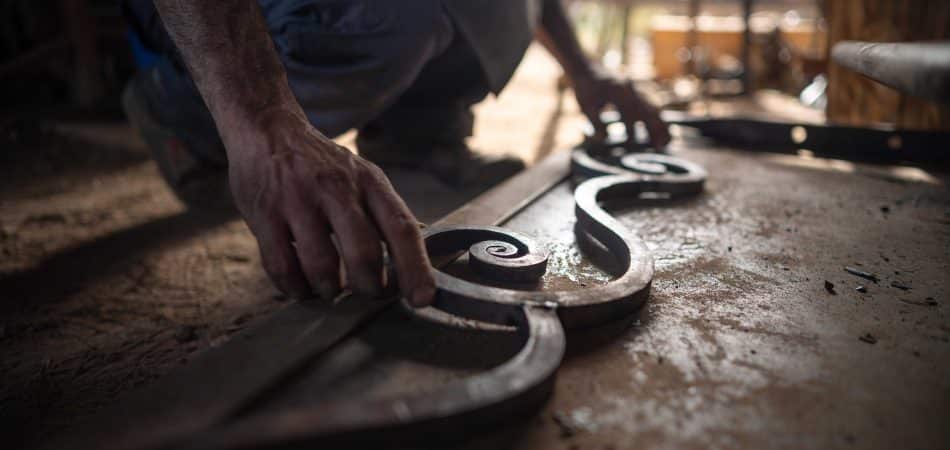
Hand forging involves heating the bar in a forge and shaping it on an anvil—slower, but unmatched for authentic traditional scrollwork.
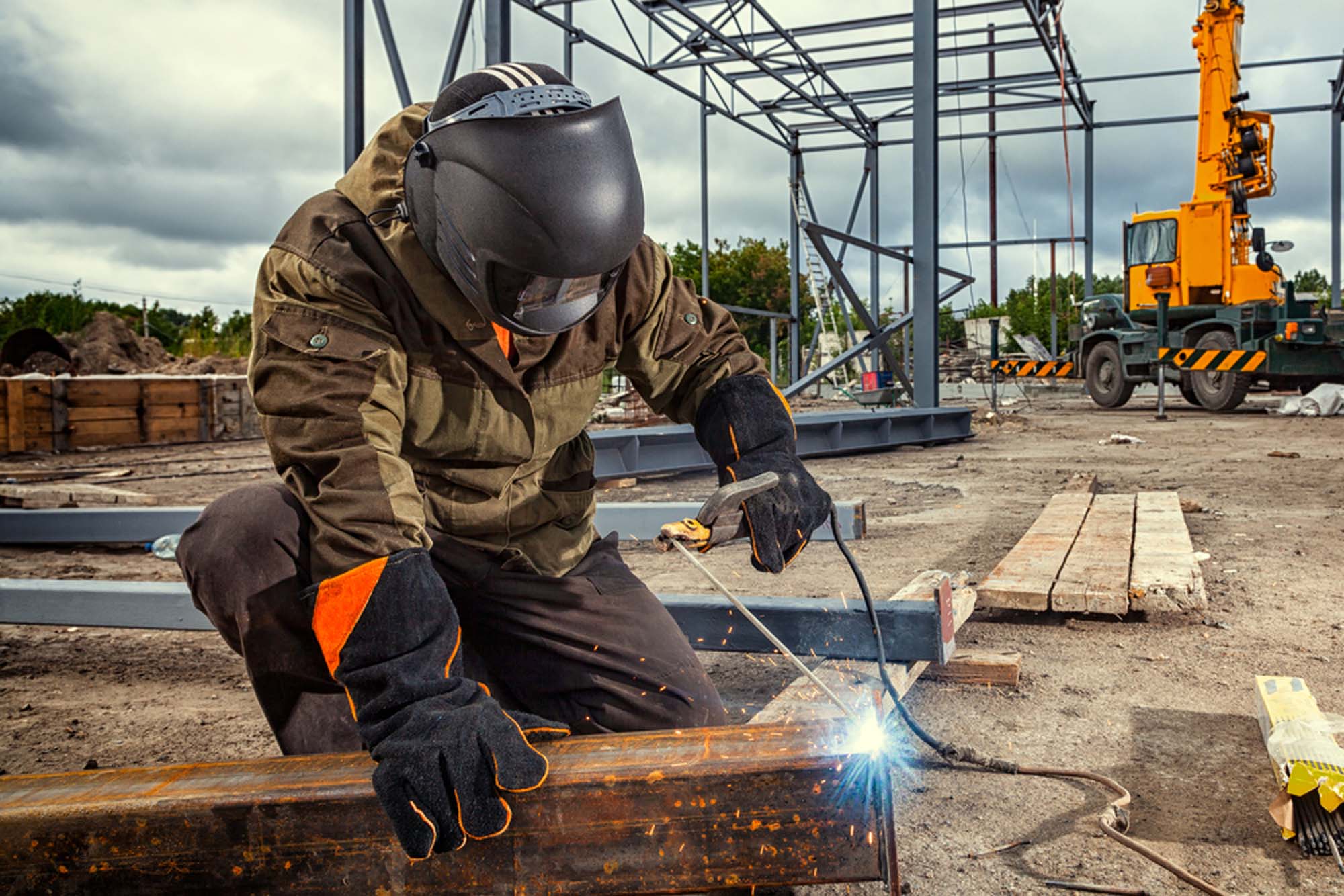
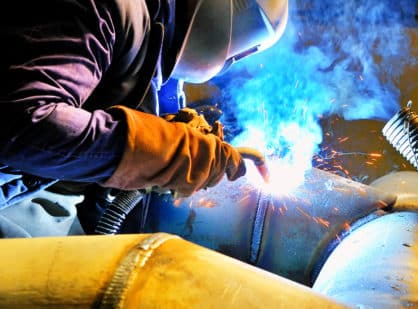
The door frame (jamb and head) is tack-welded first, squared up on the welding table, then fully welded. MIG welding is standard for production. TIG welding is used where aesthetic welds matter—typically visible joints on premium doors. Welds are checked for full penetration; voids or cold joints trap moisture and cause corrosion years later.
The door leaf (the moving part) is built next. A perimeter frame is welded first, then internal muntins and scrollwork are added. Glass opening dimensions are checked against the glass unit’s specification before final welding. Scrollwork is welded to the leaf at every contact point—not just tacked—to prevent rattles and to maintain structural integrity.
Every weld is ground smooth with an angle grinder, then progressively refined with flap discs and finishing wheels until the surface blends seamlessly. This step is what separates a crafted door from a rough shop door. It’s also the most time-consuming part of fabrication—often 20–30% of total shop hours.
The door is degreased, cleaned, and primed with a zinc-rich primer. Zinc primer is essential for corrosion protection, especially in humid climates like New Orleans. The zinc provides galvanic protection—it corrodes preferentially to the iron, protecting the underlying steel even if the top coat is scratched.
Most production iron doors are powder-coated. The primed door is hung in a spray booth, charged electrostatically, coated with dry powder, and baked at 350–400°F until the powder melts, flows, and cures into a tough, uniform finish. Powder coat is the most durable option and resists UV, moisture, and impact.
For patinas, hand-rubbed bronze, and distressed looks, finishes are applied by hand in multiple layers. This is slower and requires more future maintenance, but produces the most nuanced appearance. Hand finishes are often chosen for historic restorations where authenticity matters more than maximum durability.
Insulated glass units (IGUs) are set into the leaf with structural silicone and glazing stops. The glazing stops are typically welded-on iron strips that hold the glass in place from both sides. Silicone creates the seal and absorbs vibration. A quality glazing job prevents fogging between panes and keeps water out.
Hinges are welded or bolted to the frame and leaf. Locksets are installed—including multi-point hardware if specified—and every latch, deadbolt, and strike is tested. The door is hung in the shop, operated dozens of times, and adjusted so it swings smoothly and latches correctly.
Before the door leaves the shop, a senior fabricator performs a final inspection: finish integrity, weatherstripping seating, glass seal, hardware operation, square check, and overall finish appearance. Only after the QC pass does the door get packed for delivery.
| Stage | Typical Duration |
|---|---|
| Design & drawings | 1–2 weeks |
| Material procurement | 1–2 weeks (overlaps design) |
| Shop fabrication | 2–4 weeks |
| Finishing | 3–7 days |
| Installation | 1 day (single) / 1–2 days (double/pivot) |
End-to-end, most residential doors are ready 4–8 weeks after the contract is signed.
TurnKey Ironworks measures, designs, welds, finishes, and installs every door in New Orleans. No outsourced fabrication, no imported stock doors re-branded. Contact us today.
Iron doors are made by cutting steel stock to size, welding a frame and leaf, grinding welds smooth, priming with zinc-rich primer, applying a powder coat or hand finish, installing glass and hardware, and performing quality checks before delivery.
Typical fabrication takes four to eight weeks from signed contract to installation, including design, material procurement, welding, finishing, and scheduling. Intricate scrollwork or specialty hardware can extend the timeline.
Quality iron doors use welded construction. Bolted assemblies are used on inexpensive imported doors and are more prone to loosening, rattling, and hidden corrosion at the joints. Look for fully welded frames and leaves.
Each has its place. Hand-forged scrollwork has natural variation and authentic period character—preferred for historic homes. Laser-cut and plasma-cut scrollwork is more precise and repeatable—preferred for geometric and modern designs.
Powder coating is more durable and requires less maintenance. Hand-applied patinas and bronze finishes look more nuanced and age more beautifully but need more frequent touch-ups. The choice depends on aesthetic preference and maintenance tolerance.
Custom fabrication requires measurement, design approval, material sourcing, welding, extensive grinding, finishing, glass installation, and quality control. Shortcutting any stage produces visible defects or reduces the door’s lifespan.
 Turnkey Ironworks