

Call Us Today!
Call Us Today!

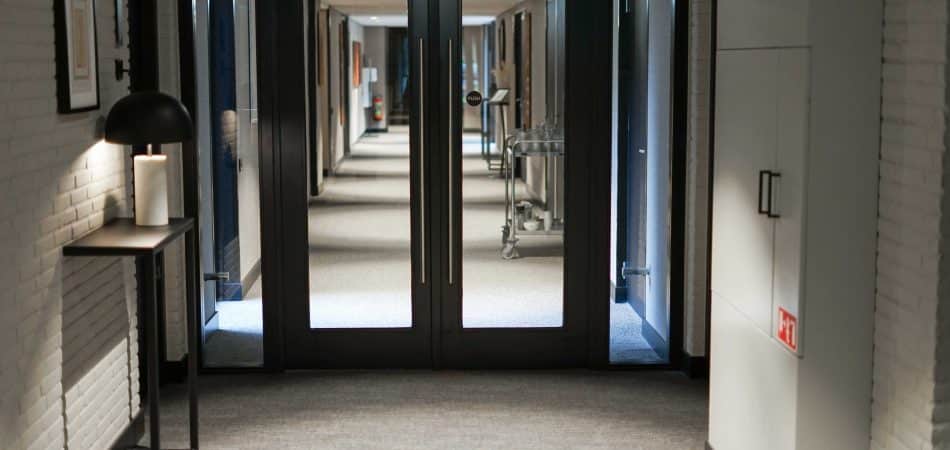
Iron doors for commercial properties offer unmatched security, durability, and aesthetic appeal, making them a preferred choice for businesses looking to protect high-value assets and enhance curb appeal. Unlike standard wooden or fiberglass options, heavy-duty iron or steel doors are designed to resist forced entry, weather damage, and wear from high-traffic environments.
Commercial iron doors typically use heavier frame tubing (2×3 or 2×4 HSS) and thicker leaf construction to handle higher use and impact loads. Residential doors usually use 2×2 HSS, which is plenty for home use but too light for a busy commercial entrance.
Commercial doors require commercial-grade hardware: heavy-duty hinges, panic hardware on egress doors, ADA-compliant lever handles, automatic door closers, and commercial lock cylinders. Most residential hardware is not rated for commercial use.
Any commercial door on an exit path must allow free egress without a key. This typically means panic hardware, fire exit bolts, or quick-release mechanisms.
Commercial iron doors must meet Americans with Disabilities Act requirements: maximum opening force (typically 5 lbf for interior and 8.5 lbf for exterior), threshold height limits (1/2″ max), lever-style hardware, and clear opening width (32″ minimum). Our design process accounts for all ADA requirements upfront.
Commercial properties in coastal Louisiana parishes often require hurricane-rated entry systems. Iron doors can be engineered to meet Miami-Dade HVHZ standards with reinforced frames, impact-rated laminated glass, and certified hardware.
 Front entrances often combine iron with glass to signal both hospitality and security. Rear service doors and alleyway exits are typically solid iron with panic hardware and reinforced frames.
Storefront iron doors serve as both security and an architectural statement. Display windows can be paired with iron roll-up gates or scissor gates for after-hours protection.
Iron vault doors, safe rooms, and secondary security doors benefit from the ballistic and forced-entry resistance that iron provides. Vestibule doors with controlled access integrate with electronic entry systems.
Iron doors in medical settings often combine glass for a welcoming first impression with robust locking for off-hours security. ADA compliance is especially important in this segment.
Man doors, service entrances, and emergency exits in warehouse and industrial settings use heavy-gauge iron with commercial hardware. Often paired with iron roll-up or sliding doors for main loading bays.
Lobbies, courtyards, and shared exterior spaces use iron doors for a combination of security, aesthetics, and weather resistance.
| Requirement | Typical Standard | Iron Door Solution |
|---|---|---|
| ADA opening force | ≤ 8.5 lbf exterior | Proper closer and hardware |
| Clear opening width | 32″ minimum | Leaf sized to net 32″+ |
| Egress (path of travel) | No key or tool required | Panic hardware or quick-release |
| Threshold height | ≤ 1/2″ (beveled) | ADA-rated threshold |
| Hurricane-rated (coastal) | HVHZ / ASTM E1886 | Engineered impact system |
The door is often the first physical touchpoint with your brand. Finish color, scrollwork pattern (or lack thereof), glass treatment, and hardware should reinforce the brand—not fight against it. A modern tech office and a Garden District restaurant will look very different, and both should look right for the business.
Be specific about the security scenarios you want to address: casual theft, break-in attempts, forced entry, social engineering, or controlled access. Different threat profiles call for different hardware and glass specifications.
Daily customer count and use patterns affect hardware specification. A door used 500 times per day needs different hinges and closers than one used 20 times per day. Tell your fabricator the expected traffic.
Many commercial iron doors integrate with key cards, keypads, or biometric access control systems. Plan the electrical rough-in during design to avoid retrofit cabling later.
Commercial iron doors typically run 20–50% higher than comparable residential doors due to heavier materials, code-rated hardware, and code-compliant engineering.
Typical installed pricing in New Orleans:
Commercial doors see more use and therefore need more frequent attention than residential doors.
Recommended schedule:
TurnKey Ironworks designs, fabricates, and installs commercial iron doors across New Orleans and surrounding parishes. We handle permitting, code compliance, and after-hours installation. Contact us today!
Yes. Iron doors provide commercial-grade security, durability, and code compliance. They’re commonly used in restaurants, retail shops, banks, medical offices, and warehouses across New Orleans.
Commercial iron doors must meet ADA opening force and threshold rules; egress requirements (typically panic hardware or quick-release on exit paths), clear opening width minimums; and, in coastal zones, hurricane impact ratings.
Commercial iron doors in New Orleans typically cost $5,500 to $22,000 installed for standard configurations. Hurricane-rated storefronts and heavy-duty systems can exceed $40,000.
Yes. Panic hardware (cross-bar push bars) and quick-release exit bolts are standard for commercial iron doors on egress paths. We specify and install code-compliant hardware as part of the fabrication.
Yes. Iron doors can be fitted with electric strikes, magnetic locks, and keycard/keypad readers. Plan the electrical rough-in during design to avoid retrofit work after installation.
Commercial iron doors typically last 30–50+ years with regular maintenance. High-traffic doors wear hardware faster than residential doors, so expect to replace closers and locksets every 7–15 years while the iron itself continues to perform.
 Turnkey Ironworks